Trending

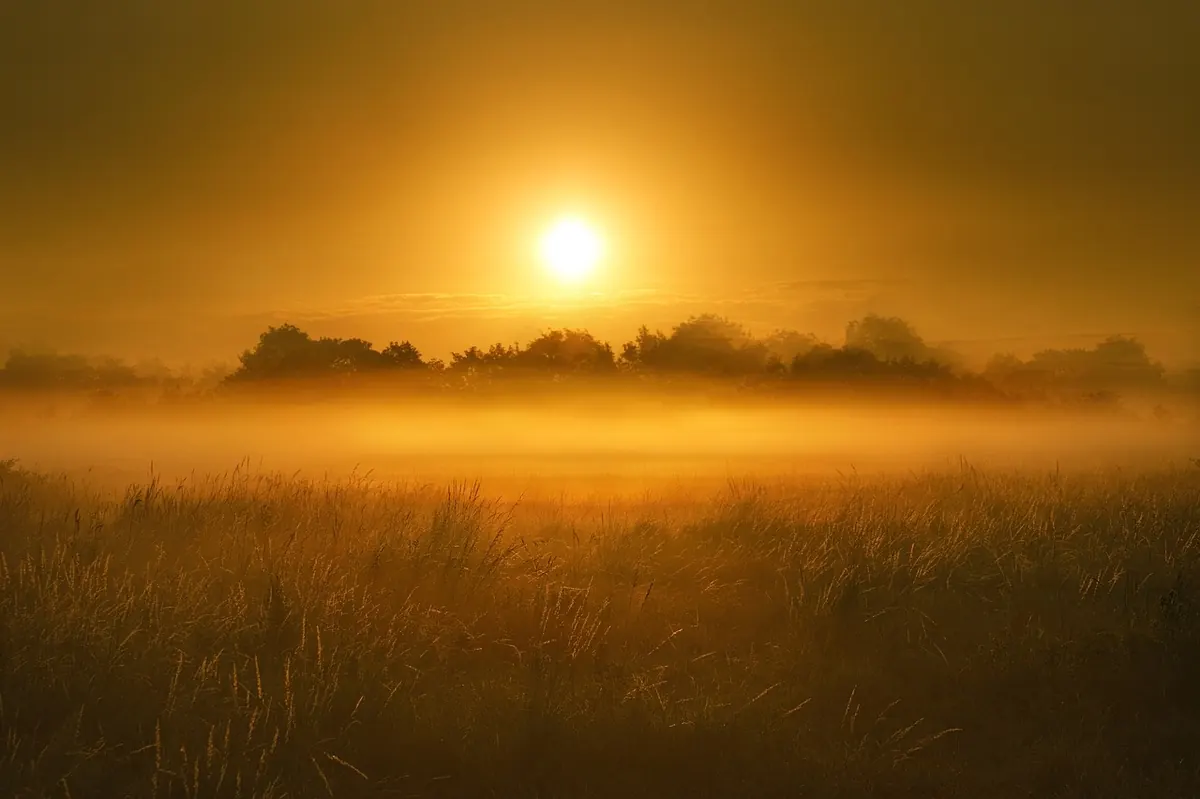
Go back to the same hedge in early March and you might hear one robin singing in near-darkness while everything else stays quiet. Return in mid-May and five birds are singing at once, and you cannot separate them. The dawn chorus is not one event but a slow assembly, and knowing the running order makes it far more rewarding. Here is what joins in, month by month, from March to June.
Song begins roughly an hour before sunrise, peaks around first light and fades within an hour of sunrise. The earliest singers are usually the same few species: robin, song thrush and blackbird. These are birds with relatively large eyes, which is likely to help them see and move in low light, and they are the ones you hear when there is barely enough light to read by.
Great tit, dunnock and wren join as it brightens, followed by the warblers and finches. Weather matters as much as the calendar. A calm, dry, clear morning after a mild night gives the fullest chorus; wind, heavy rain and cold snaps suppress it. If you have one morning to spare, choose the still, bright one.
There is also a reason the order feels so consistent. The earliest singers are often residents defending territories that they have held all winter. They know the local patch, they can afford to start before the light is good, and their songs carry in the cold, dense air. Later arrivals are more likely to be migrants that have just flown in and need to establish a territory quickly. They wait for enough light to see rivals and to avoid predators.
Listen for the way sound changes as the sky brightens. In the half-dark, songs seem slower and more spaced out. As light builds, the gaps fill. By sunrise, the chorus can feel like a crowd all talking at once. Then, almost as suddenly, it thins. Birds drop out to feed, and the morning settles into contact calls, alarm notes and the odd late singer.
March is underestimated. Residents have been singing on and off since January, and by mid-month the chorus has real structure.
Robins are often the first. Their song is high, liquid and wistful, with pauses that make it sound thoughtful rather than hurried. A song thrush follows with loud, clear phrases repeated two or three times. Listen for that repetition: it is one of the easiest ways to tell a song thrush from a blackbird. The blackbird itself is lower, flutier and more relaxed, as if it has all the time in the world.
Great tits add a ringing two-note song, often described as teacher-teacher or a squeaky see-saw. Dunnocks are easy to miss: a fast, thin, hurried warble from deep cover. Wrens explode with a trill that is astonishingly loud for such a small bird. Chaffinches may chip in with a descending rattle, and goldcrests can produce a very high, thin thread of sound from conifers.
By late March, a mild morning can produce six or seven species before sunrise. A cold one can leave you with a single robin and a lot of silence. That variation is not a failure. It is part of the month’s character.
April is when the chorus becomes an orchestra. Chiffchaffs arrive and sing their names over and over. Blackcaps add a rich, scratchy fluting from scrub and woodland edge. Willow warblers follow later in the month with a soft, descending cascade. The residents are now in full song, and the dawn gets earlier by several minutes each day.
In southern Britain, a mid-April chorus may begin before 5am. In northern Scotland, it can be closer to 5.30am or later. Wherever you are, aim to arrive at least 75 minutes before sunrise. That gives you the first solo, the first joiners and the moment the chorus peaks.
A good April hedge might hold blackbird, song thrush, robin, dunnock, wren, great tit, blue tit, coal tit, chaffinch, greenfinch, goldfinch, chiffchaff and blackcap. On a woodland edge, add nuthatch, treecreeper and the drumming of a great spotted woodpecker. The woodpecker is not singing, but it belongs to the dawn soundscape all the same.
This is also the month to notice layering. Blackbird and song thrush occupy lower, richer frequencies. Robin and wren are high and piercing. Warblers sit somewhere in between. That separation helps you pick out individual songs even when many birds are singing at once.
May is the peak. The full cast is in, or nearly in. Willow warblers, garden warblers, whitethroats, lesser whitethroats, sedge warblers, reed warblers and spotted flycatchers may all be singing. In the right place, you can add nightingale, cuckoo and wood warbler. On a good May morning, five, ten, even fifteen species may be singing at once.
The effect is overwhelming, and that is the point. The trick is not to identify everything. Pick one song, follow it for thirty seconds, then move to another. You will learn more from one bird heard clearly than from ten birds heard as a blur. May is also when International Dawn Chorus Day falls, on the first Sunday of the month, but any calm morning will do.
May mornings can begin very early indeed. In the south, the first songs may start around 3.45am or 4am. By first light, the chorus is at full volume. Then, within an hour of sunrise, it fades. Some birds have already paired and are feeding young, so they sing less. Unmated males often sing hardest and latest. That is why the chorus can feel both chaotic and competitive.
June is still rewarding, but the emphasis shifts. Mornings are very early, often starting before 4am, and many birds have paired and stopped singing. The chorus is thinner. Yet what remains is easier to hear. You may notice the wood pigeon’s five-note song, collared dove, screaming swifts and twittering swallows. Juvenile birds beg with thin, insistent calls, and fledglings follow their parents with contact notes.
Late June can feel like a lull. Then, from late June into July, some species begin post-breeding song again, especially robins. The dawn chorus never quite stops; it just changes its cast. If you have been listening since March, June feels less like an ending and more like a shift in the conversation.
You do not need to name every bird. You only need to notice who starts, who joins and who leaves.
Do that through March, April, May and June, and the same hedge will stop being a wall of noise. It becomes a running order, a set of characters and a record of the season turning.
Photo: Adriansart / Pixabay