Trending

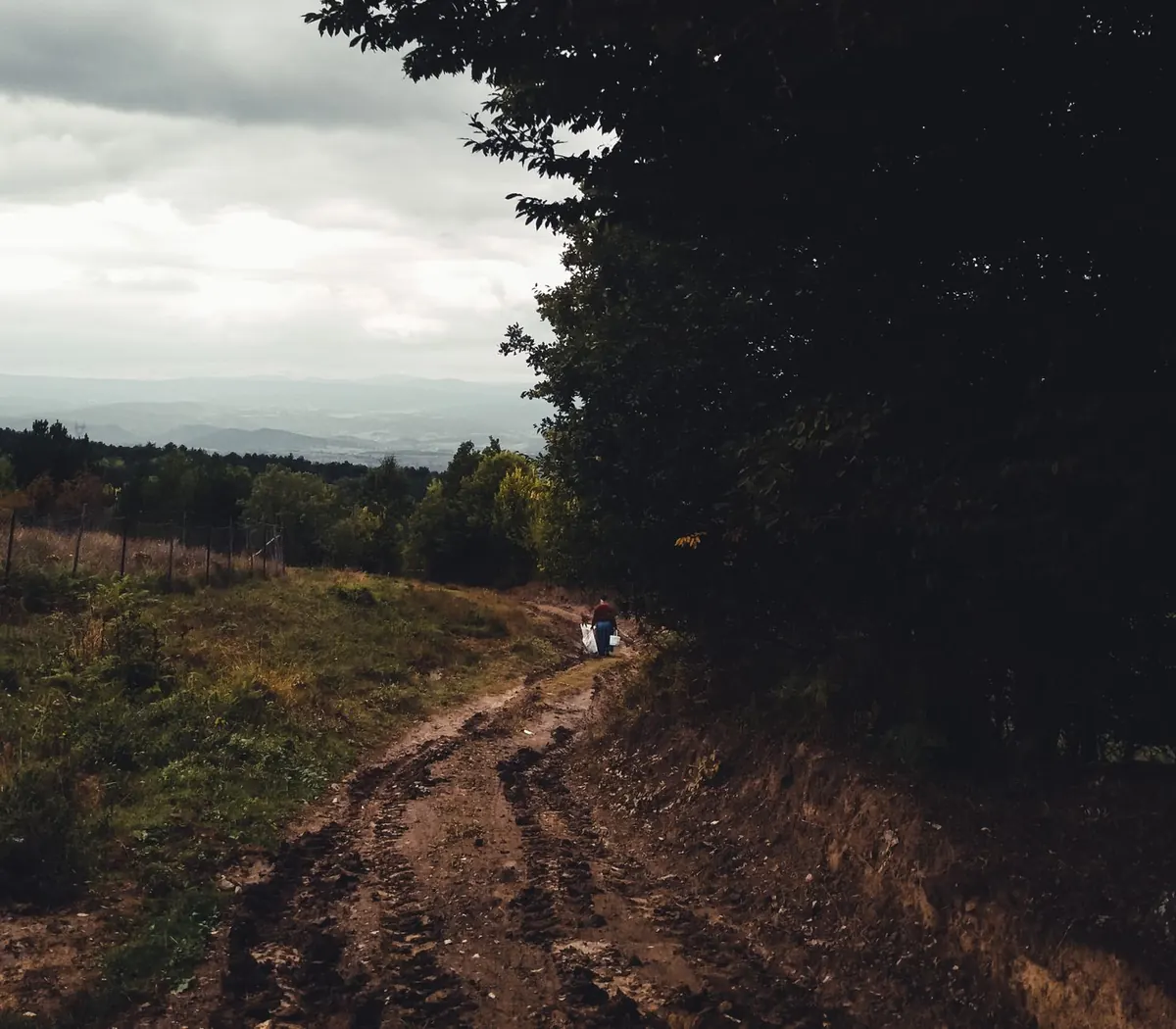
The first properly wet week of autumn changes a footpath. Mud appears at the gate, then along the shaded bend by the stream, then in the dip that never quite dries out. Most of us respond the same way and step around the worst of it. Do that a few hundred times through a winter and the path ends up twice as wide, twice as wet and considerably harder going. Walking muddy trails without wrecking them comes down to the line you take, what you wear, and the decisions you make before you set off. It is not about being precious. Mud is part of the deal on many routes, especially where clay and loam can turn a gentle walk into a slippery, boot-sucking slog. But the difference between a path that recovers by spring and one that becomes a permanent scar is usually made by hundreds of small, almost invisible choices.
Water does the damage. Once a path surface is broken, rain collects in the ruts, softens the soil beneath and carries it downhill. Across a season you get channels deep enough to turn an ankle in, and ground that stays wet long after the rain has stopped. The process is not mysterious. A boot print holds a teaspoon of water. A hundred boot prints hold a puddle. A puddle loosens the soil. The next walker steps in the puddle, pushes the mud sideways, and the path widens by another few centimetres. Repeat that every weekend from October to March and a narrow ribbon of trail can become a boggy runway.
Walkers speed this up without meaning to. Nobody wants wet feet, so we drift to the edges where the turf is still intact. Those edges then break down, and a single muddy line becomes a braid of three or four. On busy routes, this can turn a narrow trail into a quagmire. A path that started as a 60-centimetre footpath at the trailhead can be three metres wide by the time it reaches the viewpoint, with mud on both sides and a strip of worn grass in the middle that nobody uses. The damage is not just uglier. It is harder to walk on, more expensive to repair, and more likely to erode into the stream below, where the sediment can smother fish spawning gravel and cloud the water.
There is also a psychological trap. The more mud there is, the more we try to avoid it. The more we avoid it, the more mud there is. Breaking that loop starts with a simple, slightly uncomfortable rule.
If the mud is shallow enough to cross, walk straight through the middle. This feels wrong. Your boots will get dirty. But a single, well-worn muddy line is far better for the trail than five half-hearted attempts to skirt it. The path is designed to take traffic. The edges, the verges, and the delicate moss and wildflowers beside them are not.
“The path is the path. If it is muddy, that is where your feet belong.”
That does not mean charging blindly into a bottomless bog. It means choosing the least damaging line that still keeps you on the trail. A little mud is a small price for a path that survives the winter.
If the mud is genuinely deep, do not try to tiptoe around the edge. Either commit to walking through it or turn back and choose a different route. Half measures cause the most damage.
The right gear changes your behaviour. If you are wearing waterproof boots with deep tread, you are far more willing to walk through a muddy stretch instead of widening the path. If you are wearing mesh trainers, every puddle looks like a disaster, and you will instinctively drift onto the grass. So footwear is not just a comfort issue. It is a trail-conservation decision.
Avoid wearing brand-new white trainers on a wet trail. It is not a fashion rule. It is that you will spend the whole walk trying to keep them clean, and the path will pay for it.
Some of the most useful decisions are made before you leave the house. Check the weather, the trail conditions and any local alerts. If a path is officially closed because of erosion or repair work, respect the closure. Walking around a barrier makes the damage worse and can put you at risk from unstable ground.
Think about the soil. Clay and loam hold water and turn greasy after rain. Sandy or rocky trails drain faster. If you know a route is clay-heavy, save it for a dry spell or a hard frost. If you are planning a muddy walk, choose a shorter loop rather than a long through-route. That way, if the trail becomes a swamp, you can turn back without ruining the whole day.
In winter and early spring, freeze-thaw cycles are your friend and your enemy. When the ground is frozen hard, you can walk on top of the mud without sinking in. When it thaws, the same path becomes a quagmire. If you can, start early while the ground is still firm, or wait for a dry, windy day after the rain has drained. Avoid the first warm weekend after a wet week if you can. That is when trails take the heaviest hit.
Mud is always worst where walkers bunch up. Gates, stiles, kissing gates, footbridges and the narrow gap in a hedge all concentrate feet into a small area. That is where a path can widen from a narrow line into a muddy fan in a single season.
Make a point of walking straight through the bottleneck, even if it means stepping in the mud. Open the gate, step through, close it behind you. Do not stand to one side on the grass while you rummage for a map. Do not let your dog run loops around the gateway, either. Dogs can do as much damage as boots when the ground is soft, so keep them on the path or under close control.
If there is a boardwalk or stepping stones, use them. They are there for a reason. If a puddle has formed on the boardwalk, walk through it rather than stepping off into the vegetation. A wet boot is better than a crushed patch of rare moss.
There comes a point where the trail is no longer muddy. It is a bog, a wallow, or a stream that has decided to move in. In that case, the best decision is usually to turn back. Deep mud can be dangerous: it can suck a boot off, hide a hole, or lead you into a flooded section where the path has collapsed. If you are sinking past the top of your boots and the ground is quivering, retreat the way you came.
If you must continue, test each step with a pole before you put your weight on it. Move slowly. Keep your pack straps loose so you can slip out of it if you fall. Do not try to cross a flooded boardwalk if the water is fast or deeper than your knees. And if you find a section that is badly damaged, report it to the land manager or trail association when you get home. A photo and a grid reference are genuinely useful.
The principle is simple: leave the trail no wider than you found it. That does not mean you cannot enjoy a muddy walk. It means your footprints should join the existing line, not create a new one. It means you accept wet feet as part of the experience. It means you do not “fix” a muddy patch by throwing branches into it, which usually just dams water and makes the erosion worse.
If you want to do more, join a local trail maintenance group. Volunteers build boardwalks, install drainage ditches, and reinforce
Photo: pembegül / Pexels