Trending

Two sounds tell you a lot about a wetland: the clean thump of a boot on firm ground, and the soft, sucking sigh when the ground gives way. Between those two noises lie three habitats that get muddled together constantly — marsh, fen and bog. They are not interchangeable. Each forms under a different kind of water, grows a different cast of plants, and holds a different set of wildlife. On one afternoon's walk you can cross all three, if you know what to check.
Everything follows from where the water comes from and what it carries.
A marsh is wet ground over mineral soil. Water levels rise and fall through the year, flooding in winter and drawing down in summer, and the soil stays fertile rather than peaty. A fen is fed by groundwater — springs, seepages, the slow flush at the base of a slope — which arrives carrying dissolved minerals from the rock it has travelled through. That constant supply keeps the ground waterlogged, so dead plant material does not rot away fully and peat builds up. A bog gets no groundwater at all. It is fed only by rain, which is why it is acidic, nutrient-poor and the deepest peat of the three.
If you remember one thing, make it this: bogs are fed by rain, fens by groundwater, and marshes by whatever water is lying about on ground that is not busy making peat.
Marshes fluctuate, and their plants have to cope with it. You are looking for the tough, fast-growing sorts: common reed, reed sweet-grass, reed canary-grass, rushes, sedges, yellow flag iris and, on the drier fringes, purple loosestrife and hemp agrimony. The ground underfoot is silty and mineral, not spongy with moss, and after a wet spell it holds water in shallow pools rather than a continuous mat.
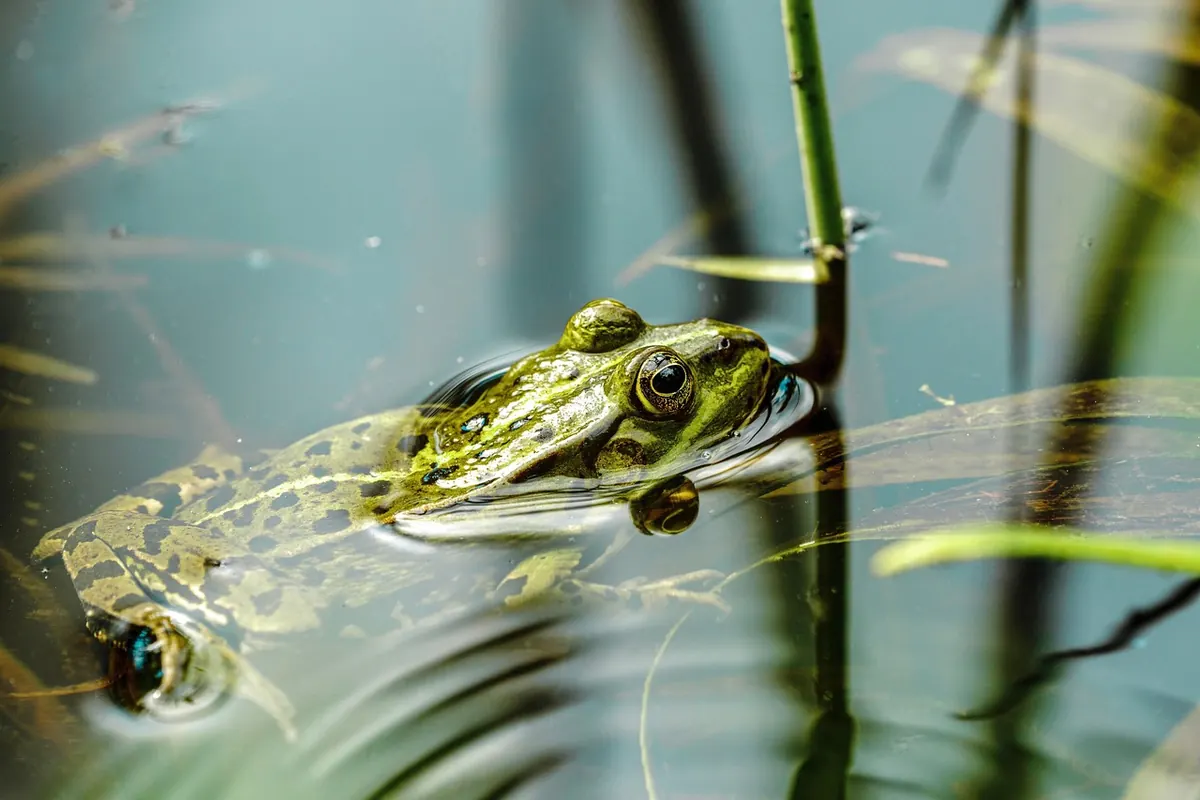
This is often the noisiest wetland. Reedbeds hide reed warblers and reed buntings; wet grassland holds snipe and, in places, breeding lapwing; ditches and dykes suit water voles; shallow pools fill with frogspawn in early spring and hum with dragonflies and damselflies by midsummer. Because marshes are shallow, warm and productive, insect life is abundant — and everything else follows the insects.
Fens feel older and calmer. The give underfoot is not a hollow squelch but a springy mattress: brown mosses and sedge litter building into peat, layer on layer, century after century. The water is mineral-rich and usually alkaline or neutral, and you can often find its source — a line of bright green growth along a slope, a small upwelling in a field corner, a flush beside a stream.
Fen vegetation is famously rich. Look for saw sedge, black bog rush, blunt-flowered rush, meadowsweet, wild angelica and marsh helleborine, with grass-of-Parnassus on the most calcareous sites. Most British fens have been drained or dug away over the centuries, so what remains is fragmented and often kept open by grazing or cutting. That rarity shows in the wildlife: specialist snails, moths and dragonflies, breeding snipe and redshank, and marsh harriers or hobbies hunting over the pools.
Bog is the odd one out, and the easiest to identify once you have it in your boots. Rain only, no minerals beyond what the wind brings, permanently waterlogged and acidic. Plants here are specialists: Sphagnum mosses in reds, greens and ochres; hare's-tail cottongrass; cross-leaved heath; heather; bog asphodel; and round-leaved sundew, which catches insects to make up for the nitrogen the peat lacks. In the uplands you may find cloudberry and dwarf birch.
The surface has a pattern to it: hummocks and hollows, a bumpy quilt of moss with wet dips between. Lowland raised bogs bulge into a shallow dome; blanket bog drapes across gentle upland slopes and is often cut into gullies. Wildlife concentrates in the wet places and in the moss itself — dunlin, golden plover and curlew on the northern bogs, red grouse and merlin, large heath butterflies, black darter dragonflies, and pools full of dragonfly larvae and diving beetles.
Real wetlands rarely sit neatly in one category. A fen may fringe a lake, with marsh where the inflow deposits silt and bog on the plateau behind. Around a raised bog you often find a wet, mineral-rich moat — a lagg — carrying fen-like plants. These transitions matter. Edges hold more species than the middle of anything, and birds and dragonflies hunt along them. If you cannot decide which habitat you are standing in, you are probably in two at once, and that is worth noting rather than worrying about.
Then do the simple thing that makes all of this stick: look at the water first, then at the plants, then at your feet. The ground answers the question for you, every time.
Photo: suju-foto / Pixabay